Alumina Substrates Bring Practical Value to DPC Substrate Solutions
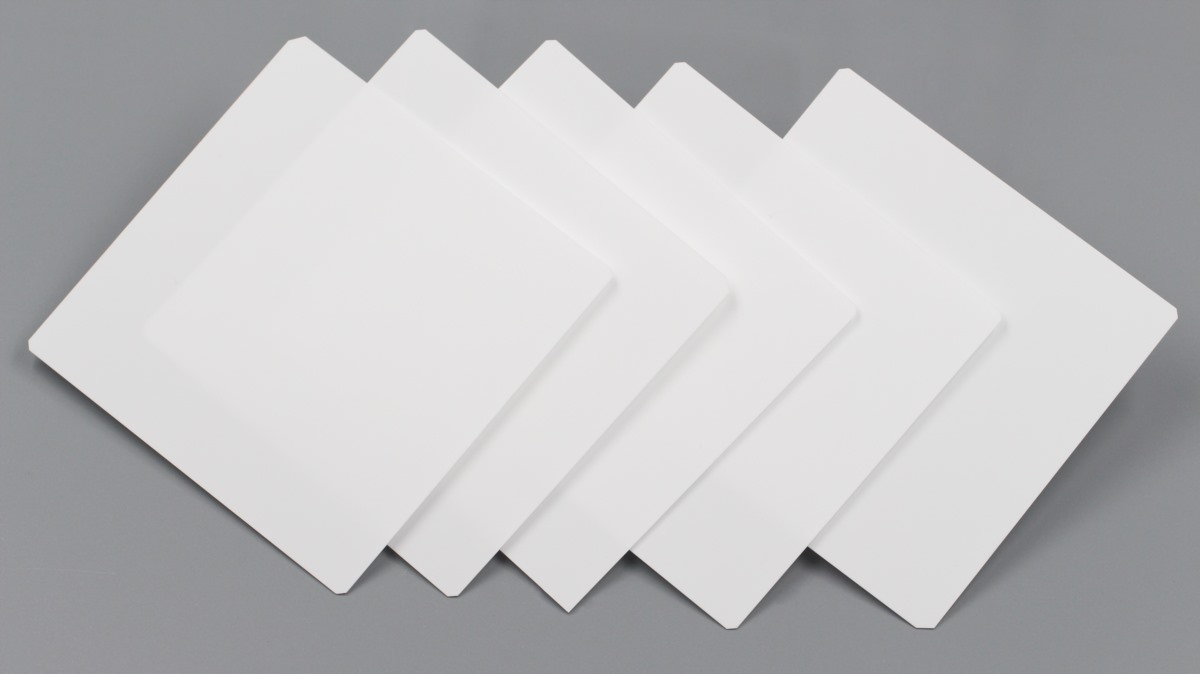
A Reliable and Cost-Effective Material Choice
Alumina substrates have been used in electronic package for a long time due to reliable electrical insulation, strong mechanical support, and steady thermal performance, which making them a good choice for a wide range of power and electronic applications used every day.
Alumina has a great advantage for cost-effectiveness when compared with other ceramic materials. Manufacturers can reach to dependable performance without driving up overall system costs, with a well-established supply chain, stable quality, and the ability to support mass production. As a result, alumina DPC substrates are particularly well suited for high-volume production and applications where cost control is just as important as reliability.
Below is our alumina substrates properties:
| Alumina Substrates Properties | ||||
| Item | Test condition | Unit | Value | |
| Content | — | — | 95%~97% | |
| Size | Customized | |||
| Tolerance | ±0.5%(Min0.15mm) | |||
| Thickness | Customized 0.38-2mm | |||
| Thickness tolerance | ±0.5%(Min0.03mm) | |||
| Warpage | <0.3% | |||
| Physical Properties | Surface roughness | Ra | μm | 0.2~0.5 |
| Density | — | g/cm3 | ≥3.70 | |
| Liquid permeability | — | — | pass | |
| Flexure strength | Three-point bending resistance | MPa | ≥380 | |
| Vickers hardness | load 4.9 | GPa | ≥14 | |
| Thermal Properties | CTE | 200℃ | 6.2~6.8 | |
| 500℃ | 1×10⁻⁶mm/℃ | 6.6~7.5 | ||
| 800℃ | 6.6~7.9 | |||
| Thermal conductivity | 25℃ | W/(m*k) | ≥21 | |
| Thermal shock resistance | 800℃ | Time | ≥10 | |
| Volume resistivity | 25℃ | Ω*cm | >1014 | |
| 300℃ | – | >1010 | ||
| 500℃ | – | >109 | ||
| Breakdow voltage | — | KV/mm | >12 | |
| Dielectric constant | 1MHz/25℃ | – | 9~10 | |
| Dielectric loss | 1MHz/25℃ | ×10-4 | ≤3 | |
| Reflectivity | Reflectivity meter | % | >91 | |
| Whiteness | Whitenesss meter | – | >88 | |
DPC Technology Unlocks More Design Flexibility
When alumina substrates are paired with DPC technology, they unlock even more potential. By using advanced surface treatment and copper electroplating processes, fine and accurate copper circuits can be formed directly on the ceramic surface, making designs more compact and increasing circuit density.
Compared with traditional thick-film or bonded copper solutions, alumina-based DPC substrates give designers much greater freedom in how circuits are laid out. This added flexibility helps improve current flow, reduce overall system size, and support more highly integrated module designs — all while maintaining strong copper adhesion and reliable performance over time.
Serving a Wide Range of Applications
Alumina DPC substrates are widely used in:
– Industrial power supplies
– IGBT and MOSFET power modules
– LED lighting and display systems
– Consumer electronics and home appliances
– General power control and management applications
In these fields, alumina DPC substrates provide a dependable foundation that supports stable operation, efficient heat dissipation, and long service life.
Summary
Alumina substrates still remain a key component of the DPC substrate product portfolio due to its long-standing reliability, cost-effectiveness, and compatibility with mature DPC processes ensure that they remain an important choice in the electronics industry.


Comments
Post a Comment