Posts

Showing posts with the label Glass-To-Metal Seals

Micro D Connectors Unveiled: Why They Matter in Today’s Technology

Image
  In the ever-evolving world of electronics, the demand for miniaturized, high-performance connectors is more prominent than ever. One such innovation that has captured the attention of engineers and designers alike is the   Micro-D connector . Known for its compact size and robust design, this connector has become a staple in various industries, including aerospace, defense, and telecommunications.   Understanding Micro D Connectors Micro D Connectors are small, rectangular connectors designed to offer high-density connectivity in a compact footprint. Despite their miniature size, these connectors are engineered to provide reliable electrical connections, even in the most demanding environments. With their ability to accommodate multiple pins in a confined space, Micro D Connectors are ideal for applications where space is at a premium, but performance cannot be compromised.   The Role of Glass-to-Metal Seals One of the key components that contributes to the reliabi...

Micro D Connectors Unveiled: Why They Matter in Today’s Technology

Image
In the ever-evolving world of electronics, the demand for miniaturized, high-performance connectors is more prominent than ever. One such innovation that has captured the attention of engineers and designers alike is the   Micro D Connector . Known for its compact size and robust design, this connector has become a staple in various industries, including aerospace, defense, and telecommunications. Understanding Micro D Connectors Micro D Connectors are small, rectangular connectors designed to offer high-density connectivity in a compact footprint. Despite their miniature size, these connectors are engineered to provide reliable electrical connections, even in the most demanding environments. With their ability to accommodate multiple pins in a confined space, Micro D Connectors are ideal for applications where space is at a premium, but performance cannot be compromised. The Role of Glass-to-Metal Seals One of the key components that contribute to the reliability of Micro D Connec...

Glass-To-Metal Seals and Feedthroughs

Image
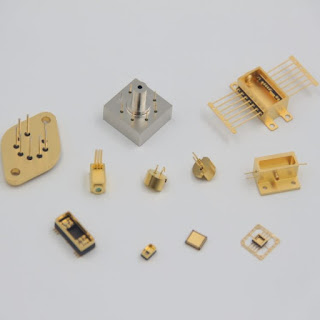
  Glass-To-Metal Seals and Feedthroughs InSealing specializes in Glass-To-Metal Seals and Feedthroughs, where glass is heated to a molten state and then wetted to the metal, creating a tight bond while carefully controlling the thermal expansion of both materials to prevent breakage. InSealing offers  Glass-To-Metal Seals and Feedthroughs . Glass is heated to a molten state then wetted to the metal, forming a tight bond. The thermal expansion of the glass and the metal are carefully measured and controlled to prevent breakage. InSealing offers not only electrical feedthroughs, the most common type we make, but also RF and microwave feedthroughs. Materials: Body materials: Cold rolled steels, Stainless steel, Inconel, etc. Glass Materials: Soda lime, Lead silicate, etc. Electrodes Material: Alloy 52, Copper Cored 52 Alloy, Alloy 42, etc. Typically Compression Seals withstand temperatures ranging from -250°C to 400°C. Allowable operating temperatures would be from -60°C to 200°C...