TCT-117 Ceramic Glazed Laser Pump Cavity Reflector Reflective for YAG Pump Chambers
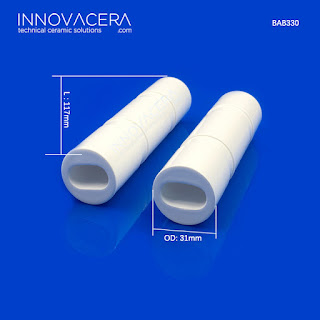
Innovacera Ceramic laser reflectors are high reflectance cavities used in solid state and CO2 laser systems. It is made of high purity 99% porous alumina ceramic and sintered at high temperatures to achieve a controlled porosity. Ceramic reflectors can be glazed both inside the cavity and around the outer edges using a highly reflective glaze that seals the ceramic against ingress of cooling fluids that may alter the refractive index, introduce impurities and reduce reflectance and efficiencies. Glazes can also act as filters and our glazed reflectors have been used successfully in certain applications. Prime Features - Surfaces can be sealed and coated with a solarization-resistant glaze to give high bulk refectivity - 97.8% reflectance efficiency at 600-1000nm - Reflectance efficiency exceeds 96% across the wavelength range 500-1200nm (see curve) - Controlled porosity, Good thermal conductivity, High electrical resistivity. Part No.: BAB330(TCT117) Dimension: Φ31.00xΦ12.00x117 mm Ph...
