BN Setter Plates for AlN and Si3N4 Sintering: Process and Material Selection Guide
What is a setter plate?
A setter plate is a high-temperature support Boron Nitride Square Crucibles used inside a sintering furnace to hold ceramic substrates during firing. It helps maintain dimensional stability, minimizes deformation, and prevents contamination throughout the sintering cycle.
In AlN Substrate and Si3N4 Substrate manufacturing, the setter plate is not only a “supporting tool” but also a critical process component that directly affects material purity, sintering uniformity, and yield.
Especially in the sintering process of aluminum nitride and silicon nitride substrates, extremely high requirements are placed on the setter plate material: it must not contaminate the material system and must withstand high temperatures, atmosphere changes, and long-term thermal cycling.
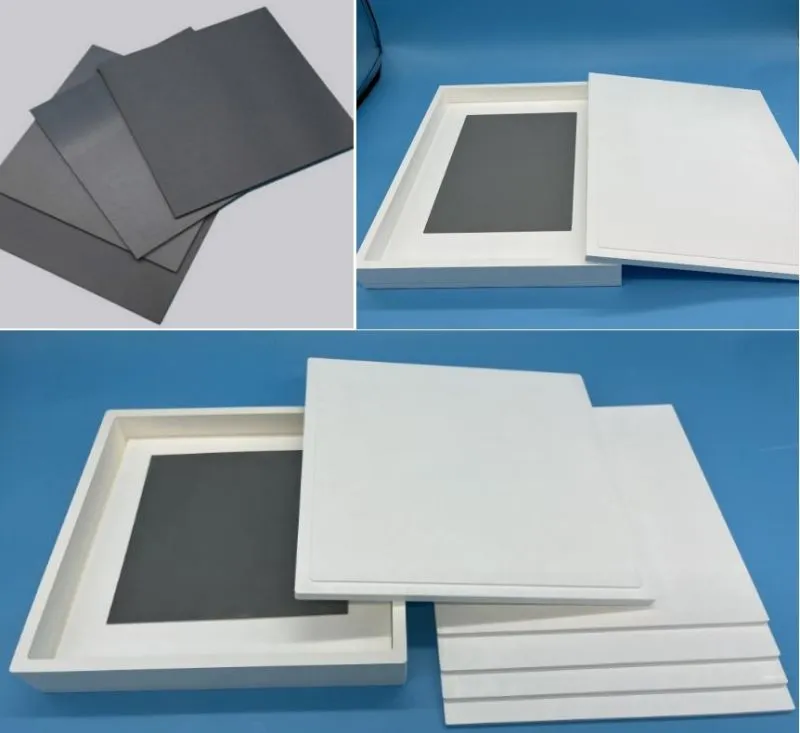
Why is the setter plate so critical in AlN/ Si3N4 sintering?
AlN and Si3N4 are typical “highly sensitive structural ceramics,” whose properties are extremely sensitive to impurities:
1. Oxygen content determines thermal conductivity (especially AlN)
The thermal conductivity of AlN is highly dependent on oxygen content control:
(1)Oxygen entering the crystal lattice → forming defects → significantly decreasing thermal conductivity
(2)Any external oxygen source can lead to performance runaway.
2. Surface reactions affect densification (Si3N4)
Si3N4 readily reacts at high temperatures with SiO₂-like oxides,Al2O₃based ceramics, Metal contaminants resulting in Abnormal surface glass phase, uneven grain growth and denimization defects
3. Long sintering cycle = cumulative contamination risk
Typical sintering process:
- 1600–1900°C
- Several hours to over ten hours
- Nitrogen / Ammonia / Inert atmosphere
So the sintering plate becomes a “secondary contamination source.”
Core Evaluation Dimensions for Sintering Plate Material Selection
Selecting a sintering plate essentially involves balancing four dimensions:
1. High-Temperature Stability
Can it withstand 1700–1900°C long-term?
Does it soften, creep, or deform?
2. Chemical Inertness
Does it react with AlN/Si₃N₄/sintering additives?
Does it release impurities (O, Si, Al, C, etc.)?
3. Volatilization and Precipitation Risk
Does it volatilize at high temperatures?
Does it produce particulate contamination (pulverization/flaking)?
4. Thermal Compatibility
Does its thermal expansion match the material being sintered?
Does it lead to warping or stress concentration?
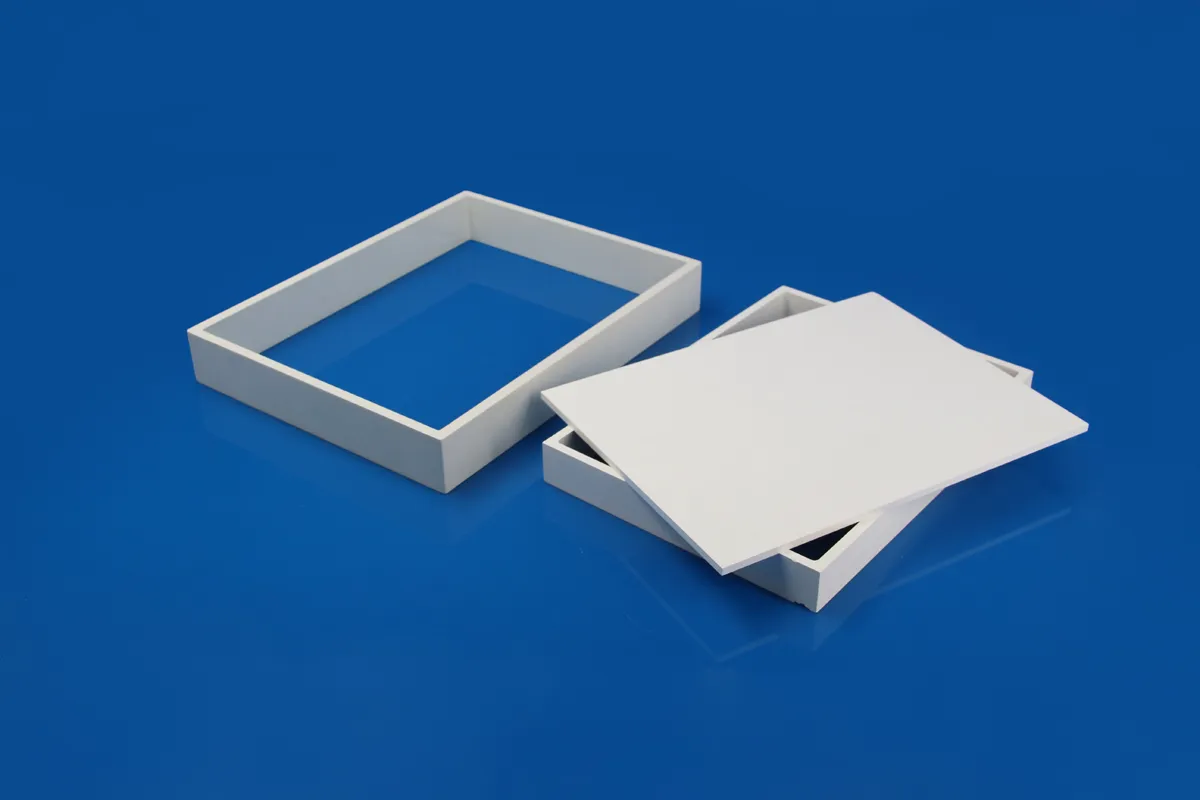
Reasons for Choosing Boron Nitride (BN) Sintering Plates?
Key Advantages:
✔ Extremely High Chemical Inertness
Does not react with AlN/Si3N₄
Does not release oxygen, carbon, or metallic impurities
✔ Non-wetting
Ceramic powder does not adhere
Reduces scrap rate and cleaning difficulty
✔ High Temperature Stability
Up to ~2100°C in an inert atmosphere
✔ Low Thermal Stress
Excellent thermal shock resistance
Not prone to cracking
Process Improvements Brought by BN Firing Plates (Practical Value)
- After using a BN sintering system, customers typically achieve:
- Improved consistency of AlN thermal conductivity
- More uniform Si3N4 densification
- Reduced batch fluctuations
- Significantly reduced powder contamination
- Reduced furnace cleaning frequency
- Improved finished product yield
In the AlN and Si3N4 sintering system, the sintering plate is not merely a “carrier,” but a critical process node that determines the upper limit of material purity and performance. Innovacera can provide customized solutions for your sintering . For more selecting guides, welcome to contact our sales engineers at sales@innovacera.com


Comments
Post a Comment